
How Do You Know When a Skin or Aging Concern Needs a Clinical Provider Instead of More Products?

15
At some point, most people hit the same wall. The skincare routine that used to work suddenly does not. The serum that promised to fix everything sits half used in the cabinet, and the concern it was supposed to address is still staring back in the mirror. This is usually the moment people start wondering whether it is time to see an actual provider instead of trying yet another product, and figuring out that answer is easier than it might seem.
There is often a hesitation here, a sense that seeking clinical care means the situation has become more serious than it really is. In practice, the opposite is usually true. Recognizing early that a concern needs more than a skincare adjustment tends to lead to simpler, more effective treatment down the line, rather than waiting until options become more limited.
What Are the Signs Your Concern Has Outgrown At-Home Products?
The most reliable sign is time. If a concern, whether that is acne, fine lines, or uneven skin tone, has persisted for several months despite a consistent skincare routine, it is likely being driven by something a topical product cannot fully address. Over the counter products work primarily on the skin's surface, while many common concerns originate deeper, in collagen structure, muscle activity, or underlying pigment cells.
Another clear sign is progression. If a concern is getting worse rather than staying stable or improving slightly, that is generally a strong indicator that professional evaluation is worth pursuing sooner rather than later.
What Conditions Typically Require a Clinical Evaluation Rather Than Skincare Alone?
Persistent acne and acne scarring are common examples, since active breakouts often involve hormonal or bacterial factors that topical products alone cannot fully resolve, and scarring specifically requires treatments like microneedling or laser resurfacing that stimulate deeper skin remodeling. Similarly, visible redness and broken capillaries, often mistaken for simple irritation, frequently require targeted treatments like laser pigment removal or IPL rather than calming creams.
Volume loss and dynamic wrinkles fall into this category as well. No amount of moisturizer restores lost facial volume or relaxes the muscle activity behind expression lines, which is why concerns like these typically point toward dermal fillers or Botox rather than skincare adjustments.
What About Sagging Skin or Signs of Aging Around the Jawline and Neck?
This is one of the clearest examples of a concern that skincare products simply cannot address. Firmness depends on collagen and elastin deep within the skin, and while topical retinoids can offer modest improvement, meaningful change typically requires treatments like laser skin tightening, which stimulates collagen production at a level topical products cannot reach.
What Happens During a First Visit to an Aesthetic Clinic?
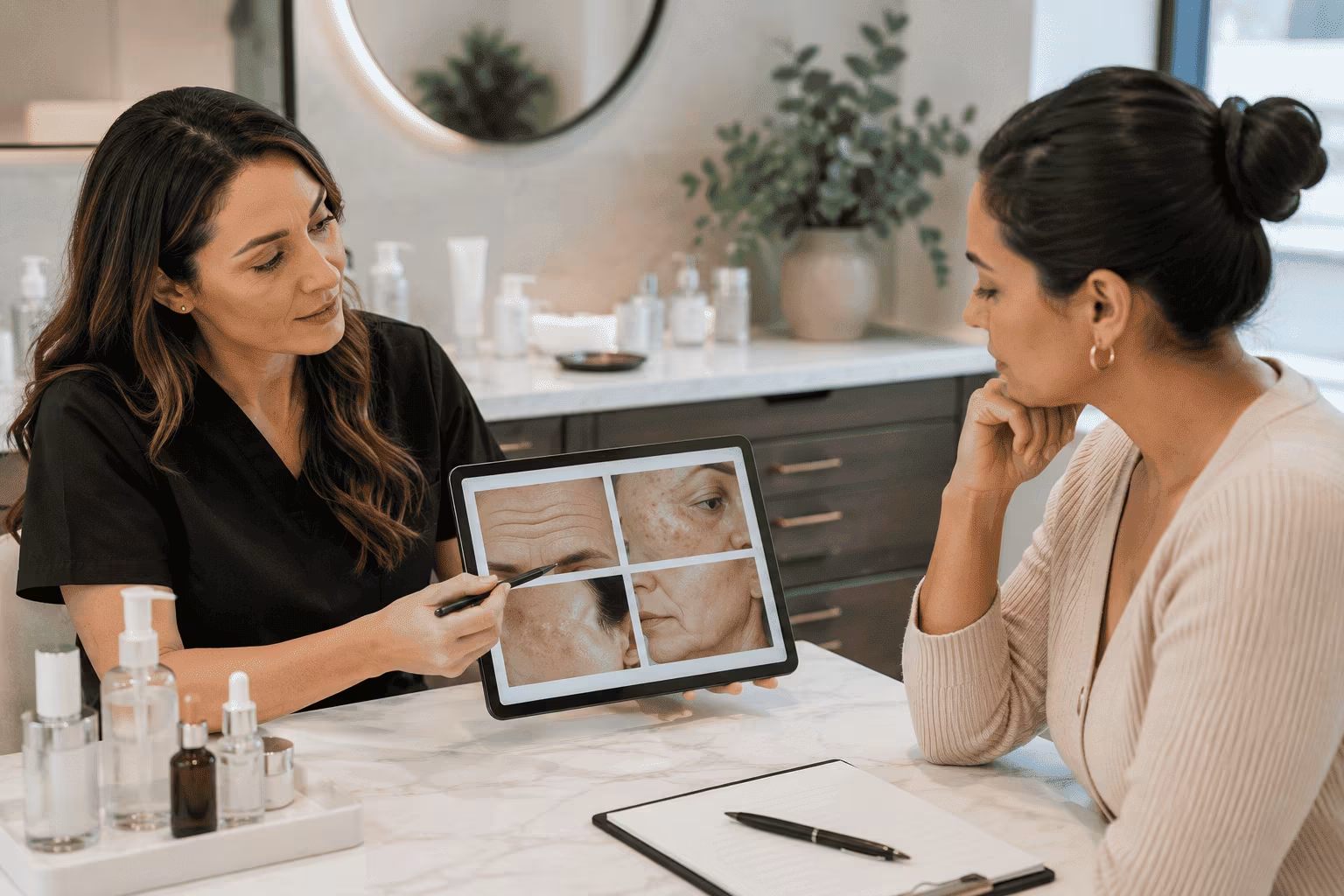
A proper first visit should feel thorough rather than rushed. Expect a detailed conversation about your concerns, how long they have been present, and what you have already tried. A good provider will examine your skin directly, ask relevant questions about your health history, and offer an honest assessment of what is realistically achievable, rather than promising dramatic results from a single visit.
This is also the point where a provider can identify whether your concern is purely cosmetic or whether it might benefit from addressing an underlying cause, such as hormonal shifts affecting skin or hair.
Do You Need a Referral to Visit an Aesthetic Clinic?
Generally, no. Most aesthetic clinics, including ours, allow patients to book directly without needing a referral from a primary care physician or dermatologist. That said, if you have a specific medical skin condition, coordinating with your primary provider alongside your aesthetic treatment plan is often a good idea for a more complete picture of your care.
This is particularly true for concerns that might overlap with a broader medical issue, such as persistent adult acne potentially linked to a hormonal condition, or hair thinning that could be connected to an underlying health change. A thorough aesthetic clinic will recognize when a concern might benefit from this kind of coordinated approach, rather than treating every symptom in isolation.
How Do You Choose the Right Aesthetic Clinic in Chicago?
A few factors matter more than flashy marketing. Look for a clinic with licensed medical providers overseeing treatment, particularly for anything involving injectables or laser procedures. A thorough consultation process, rather than a quick sales pitch, is another strong indicator of quality care. Finally, a clinic willing to tell you when a treatment is not necessary, or when a more conservative approach makes sense, is generally more trustworthy than one pushing every service on the menu.
A Therahaus Wellness, our team is built around this exact philosophy, with providers who prioritize an accurate assessment over a hard sell, whether you are visiting our Chicago location or coming in from nearby South Loop.
What Should You Bring to Your First Consultation?
It helps to bring a general sense of your skincare history, including products you have tried and how long you have used them, along with any relevant health history, particularly around hormones, medications, or previous cosmetic treatments. Photos from a year or two ago can also be genuinely useful, since gradual changes are often easier to spot in comparison than day to day.
What Are Common Misconceptions That Keep People From Seeking Clinical Care?
One frequent misconception is that clinical treatments are only for dramatic or severe concerns, when in reality most patients seeking care at an aesthetic clinic are addressing fairly common, moderate issues like early wrinkles, mild acne scarring, or gradual volume loss. Another misconception is that these treatments require significant downtime or recovery, when many of the most commonly requested procedures, like Botox or laser treatments, involve little to no interruption to daily life.
There is also a tendency to assume that seeking professional care means committing to an ongoing, expensive treatment plan right away. In reality, a good consultation is simply an information gathering step, giving you a clear picture of your options without any obligation to move forward immediately.
How Should You Think About Cost Before Your First Visit?
Cost is a reasonable concern, and it is worth addressing directly rather than avoiding the topic until you are already in the exam room. Clinical treatments vary widely in price depending on the concern and the specific procedure involved, and a good provider should be able to give you a clear, honest estimate during your consultation rather than a vague range. It is also worth asking whether a concern requires a single treatment or an ongoing series, since this significantly affects the total investment over time.
Many clinics, including ours, are upfront about pricing during the consultation itself, allowing you to make an informed decision without pressure before committing to anything.
The Final Verdict on When to Make the Call
There is no need to wait until a concern feels unbearable before seeking professional input. If something has persisted for months despite consistent at-home care, or if you are simply curious what a clinical evaluation might reveal, that alone is reason enough to book a consultation. Waiting rarely makes a concern easier to address, and an honest conversation with a qualified provider often clarifies more in twenty minutes than months of guessing with over the counter products ever could.
You can explore our full range of services to see what might apply to your specific concern, or reach out through our contact page to schedule your first visit.
Frequently Asked Questions
How do I know if my skin concern is serious enough for a clinic visit? If a concern has persisted for several months despite consistent skincare, or if it is worsening over time, it is generally worth a professional evaluation.
Will an aesthetic clinic recommend treatment even if I don't need it? A trustworthy clinic will tell you honestly when a concern does not require intervention yet, rather than recommending unnecessary treatments.
Is a consultation at an aesthetic clinic expensive? Consultation costs vary by clinic. Many, including ours, offer initial consultations designed to help you understand your options before committing to any treatment.
Can an aesthetic clinic help with concerns beyond skin, like hair or hormones? Yes, many clinics offer a broader range of services, including hair restoration and hormone therapy, addressing concerns connected to but beyond the skin itself.
Does visiting an aesthetic clinic mean I have to commit to treatment right away? No. A consultation is generally an informational step, giving you a clear picture of your options before any decision to move forward.
This information was updated in August 2026 to reflect current treatment approaches and patient guidance.