
Exosomes in Aesthetic Medicine: The Future of Regenerative Skin Care

06
At Therahaus Wellness MedSpa, we are always looking for innovative ways to support the health, quality, and appearance of your skin. One of the most exciting areas of regenerative aesthetics is exosome technology.
Exosomes are tiny extracellular vesicles that act as messengers between cells. They carry a complex collection of biological signals – including growth factors, proteins, cytokines, and other signaling molecules – that can influence cellular communication and processes involved in tissue repair and regeneration.
In aesthetics, this technology is being explored for its potential to support healthier-looking skin, improve the appearance of texture and tone, and complement treatments that intentionally stimulate the skin's natural healing response.
What Are Exosomes?
Think of exosomes as tiny communication packages released by cells. Our cells constantly communicate with one another to coordinate processes such as repair, inflammation, and regeneration. Exosomes participate in this communication by carrying molecular signals from one cell to another.
This is what makes them particularly interesting in regenerative aesthetics.
Rather than simply adding moisture or temporarily improving the appearance of the skin, exosome technology is designed to work at the level of cellular communication, supporting the biological processes that contribute to healthy-looking tissue. Exosomes can contain a wide variety of signaling molecules, including growth factors, cytokines, proteins, lipids, and RNA.
Why Do Growth Factors Matter For Skin?
Growth factors are naturally occurring proteins that help regulate important cellular processes. They play a role in communication between cells and are involved in processes such as tissue repair and the production and organization of components that give skin its structure.
As we age, our skin's natural regenerative processes change. Collagen production decreases, cellular turnover slows, and environmental stressors can contribute to changes in texture, tone, and elasticity. This is one reason regenerative approaches have become such an exciting area of aesthetic medicine.
Exosomes contain a broad range of biological signaling molecules that may help influence these cellular processes. The goal is not simply to "add growth factors," but to support the communication pathways involved in skin repair and regeneration.
Exosomes vs. PRP
You may have heard of PRP, or platelet-rich plasma, as another regenerative treatment. PRP is made from your own blood. After a blood draw, the sample is processed to concentrate platelets. These platelets contain growth factors and other signaling molecules that are naturally involved in the body's healing response. Because PRP comes directly from the patient, its composition can vary from person to person.
Exosome products are manufactured from a defined biological source and are intended to provide a more standardized collection of biological signaling molecules.
Both approaches are designed around the concept of supporting the body's regenerative processes, but they are fundamentally different technologies.
At Therahaus Wellness, we believe the important distinction is not simply "which one is better," but which approach is appropriate for the patient's goals and the treatment being performed.
How We Use Exosomes at Therahaus Wellness MedSpa
Exosome technology can be incorporated into aesthetic treatment plans in several ways. The appropriate application depends on the specific product, treatment, and patient's goals.
Topical Exosomes After Microneedling
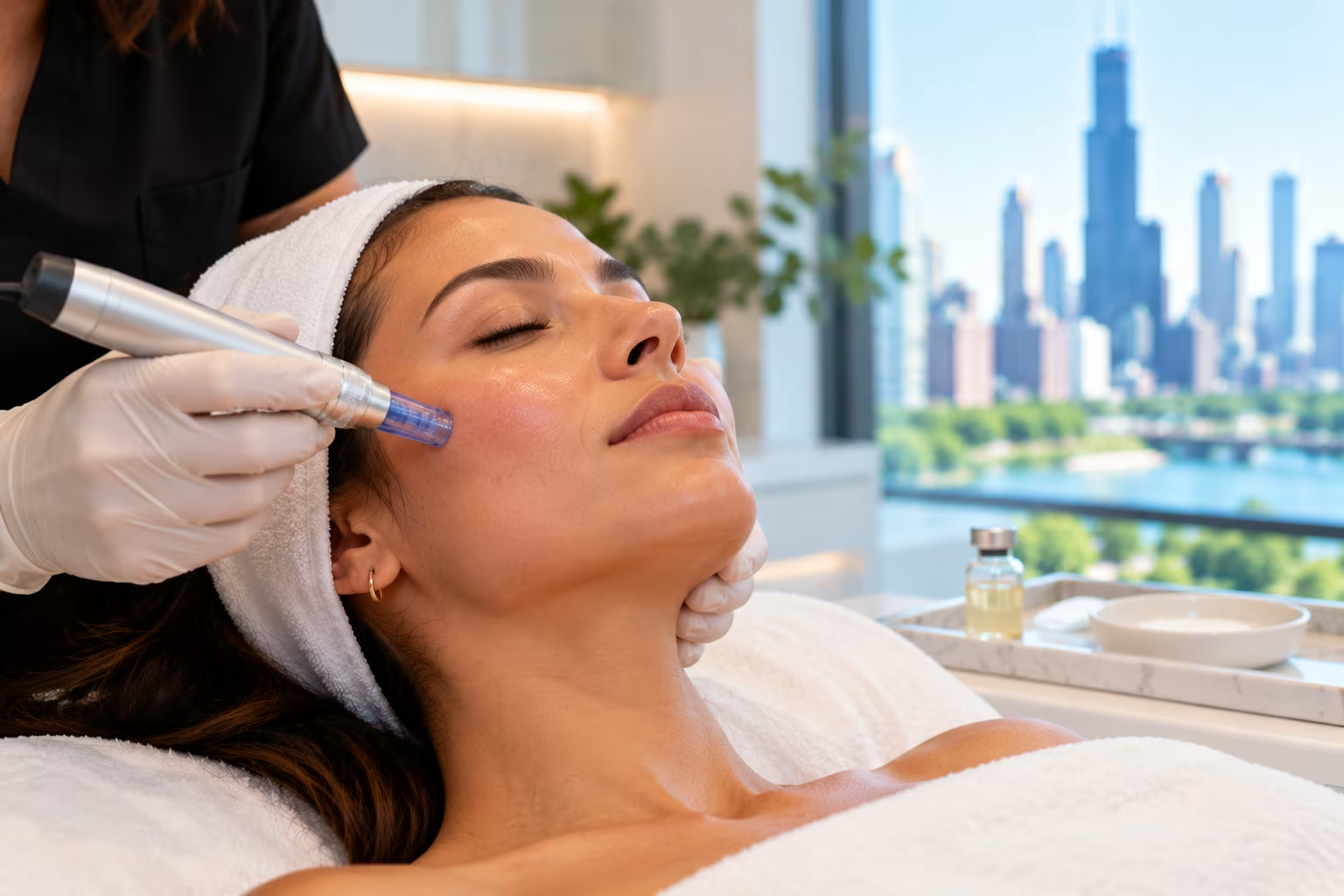
Microneedling creates controlled micro-injuries in the skin. This triggers the body's natural wound-healing response and stimulates processes associated with collagen remodeling. An appropriate topical exosome product may be incorporated into the procedure and post-treatment protocol.
The concept is simple: microneedling stimulates the skin's repair response, while topical exosome products provide biological signaling molecules during this regenerative process. The addition of exosomes supports the skin’s recovery and improves overall skin quality.
Patients may experience temporary redness, warmth, swelling, or sensitivity following microneedling. Your provider will provide specific post-treatment instructions based on your treatment and skin type.
Topical Exosomes After Laser Treatments
Laser treatments such as MOXI and HALO intentionally create controlled injury or thermal effects within the skin to stimulate remodeling. Because these treatments activate the skin's natural repair response, post-procedure care is especially important.
A topical exosome product may be incorporated into an individualized post-laser protocol. The goal is to support the skin during its recovery and regenerative process.
At Therahaus Wellness, we combine advanced treatments with carefully selected post-procedure skincare to help optimize the environment in which your skin heals.
Exosomes and the Under-Eye Area
The skin around the eyes is among the thinnest and most delicate skin on the face. Fine lines, crepey texture, and changes in skin quality can become increasingly noticeable over time. Regenerative approaches involving exosome technology can support the appearance and quality of this delicate skin.
Because the under-eye area is so sensitive, treatment selection and technique are particularly important. Your provider will evaluate your anatomy, skin quality, and specific concern before recommending an appropriate treatment approach.
Exosomes and Hair Restoration
Hair follicles rely on complex cellular signaling to maintain their normal growth cycle. Researchers have studied whether exosome-derived signaling molecules can influence the follicular environment and support processes involved in hair growth.
For patients experiencing hair thinning or loss, identifying the underlying cause is an important first step. Depending on the individual, treatment may involve laboratory evaluation, topical or oral therapies, PRP, exosomes, or other evidence-based approaches.
Why Are Exosomes So Exciting?
The interest in exosomes comes from their ability to carry multiple biological signals at once. Unlike a single-ingredient skincare product designed to address one pathway, exosomes contain a more complex collection of signaling molecules involved in communication between cells. This makes them particularly interesting for regenerative medicine and aesthetics.
However, it is important to recognize that exosome research is still evolving. Not every exosome product is the same, and the evidence supporting one formulation or application cannot automatically be applied to another.
The Importance of the Source
At Therahaus Wellness MedSpa, we believe patients should know what is being used on their skin and where it comes from.
Kimera's exosome technology utilizes a defined placental mesenchymal stem-cell source. The company’s cell bank originates from a single placental donor collected prior to the COVID-19 pandemic, with extensive screening and characterization of the source material. The goal of using a defined source and controlled manufacturing process is to promote consistency and allow the resulting product to be carefully characterized.
Products are maintained according to manufacturer storage and handling requirements, including appropriate frozen storage when specified, and are handled according to our clinical protocols.
We believe transparency about product source, manufacturing, testing, storage, and intended use is an important part of responsible regenerative aesthetics.
What Can You Expect From an Exosome Treatment?
Exosome treatments are not a "quick fix." Their purpose is to support the biological processes that contribute to healthy-looking skin and tissue.
Depending on the treatment, patients may be looking to improve:
- Overall skin quality
- Texture and smoothness
- The appearance of fine lines
- Post-procedure recovery
- The appearance of certain types of scarring
- Hair thinning or loss
- The appearance of delicate under-eye skin
Results vary based on the treatment, product, application, skin condition, and individual biology.
The Future of Regenerative Aesthetics
The field of regenerative aesthetics continues to evolve rapidly. As our understanding of cellular communication grows, these technologies may allow aesthetic medicine to move even further toward treatments that focus not only on changing the appearance of the skin, but also on supporting its underlying biology.
At Therahaus Wellness MedSpa, we are excited to be part of this evolving field while maintaining a thoughtful, evidence-informed approach to emerging treatments.
Healthy skin is not just about what you put on the surface. It's about supporting the biology underneath.
Ready to Learn More?
If you're interested in exosomes for skin rejuvenation, post-procedure care, under-eye concerns, or hair restoration, schedule a consultation at Therahaus Wellness MedSpa.
We'll evaluate your skin, discuss your goals, and create a treatment plan tailored specifically to you!