Is a Hydrafacial Worth It for Dull, Congested Skin?

17
You can use excellent skincare and still notice a complexion that looks tired by midweek. Makeup settles unevenly, pores seem more visible, and your skin may feel both oily and dehydrated. If you want a polished appearance without committing to significant recovery, is a Hydrafacial worth considering?
Hydrafacial can be a useful professional treatment for temporary dullness, surface buildup, pore congestion, and dehydration. It combines exfoliation, suction-assisted extraction, and serum application in one visit. It is not a cure for persistent acne, deep scars, or all pigmentation problems, but it can complement a consistent skincare routine.
Why Can Skin Look Dull Even With a Good Routine?
Dullness can result from accumulated dead surface cells, dryness, uneven texture, and light reflecting irregularly from the skin. Congested pores develop when oil and dead cells collect inside follicles. Stress, seasonal weather changes, irritating products, and inconsistent cleansing may make these issues more noticeable.
In Chicago, shifts between outdoor cold, indoor heating, and humid summer conditions can change how skin feels. Climate alone does not diagnose a skin condition, but it helps explain why a routine that feels comfortable in one season may need adjustment in another.
What Happens During a Hydrafacial?
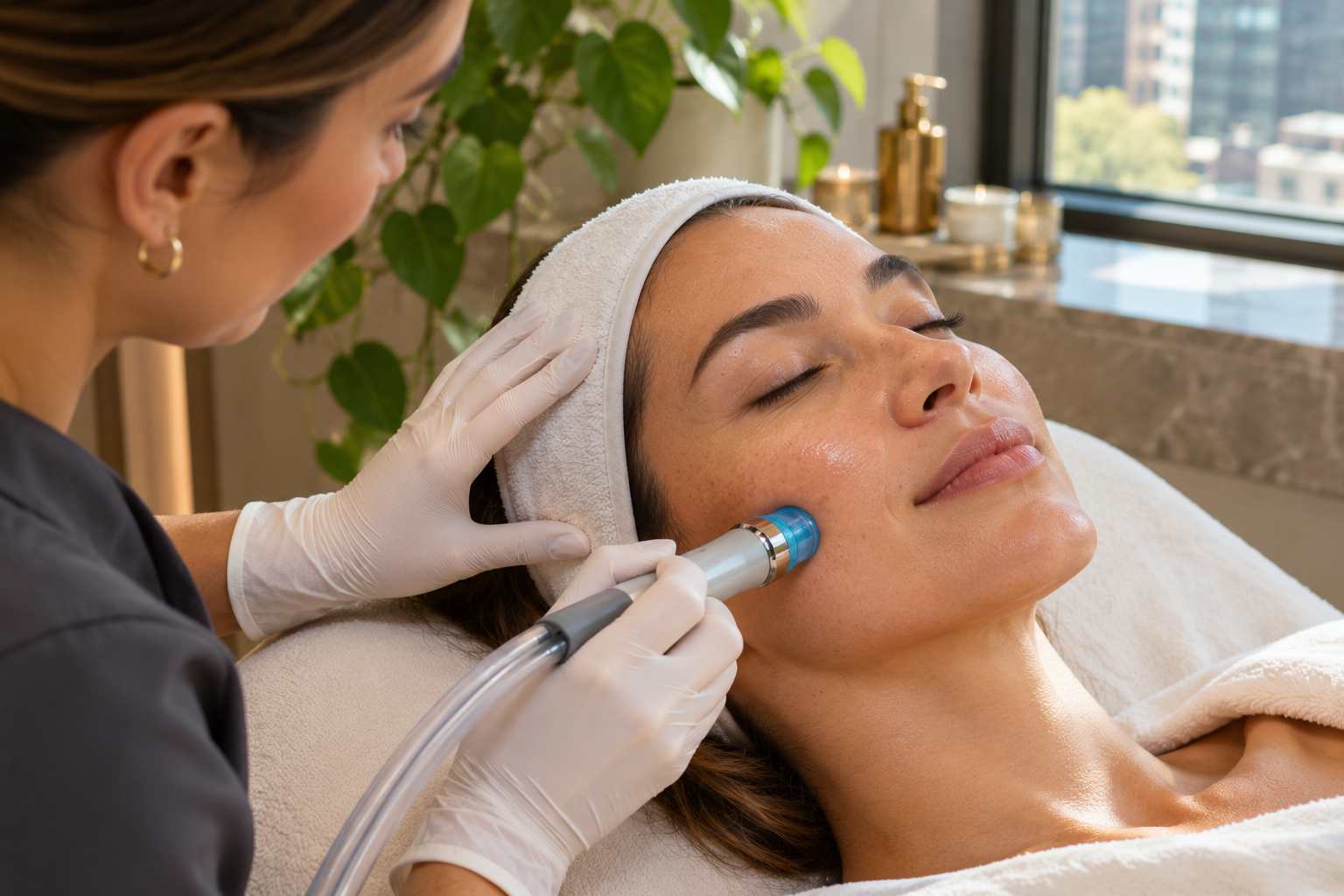
Therahaus Wellness describes Hydrafacial as a multi-step treatment using vortex-assisted technology. The process includes cleansing and exfoliation, a gentle acid step, suction-assisted extractions, and application of hydrating serums. The service page also documents customization with selected boosters for concerns such as fine lines, uneven tone, and congestion.
The procedure is designed to be more comfortable and less disruptive than many stronger resurfacing options. However, skin sensitivity varies, and temporary redness or irritation can still occur. Your provider should tailor the steps to your skin's condition that day.
Does Hydrafacial Actually Clear Congested Pores?
It can remove some superficial debris and help the skin feel cleaner and smoother. The suction step may be particularly appealing to people with visible blackheads or oily areas. Yet clogged pores can recur because sebum production and cell turnover continue after treatment.
For persistent comedonal acne or inflamed breakouts, a long-term treatment plan may be more useful than repeated extraction alone. A professional can help distinguish routine congestion from acne that warrants medical evaluation. Avoid assuming every bump should be extracted.
Can Hydrafacial Improve Dehydrated Skin?
Hydrating serums may temporarily improve the feel and appearance of dryness and roughness. This can make skin look smoother and more luminous, particularly when dehydration is a major reason makeup appears patchy.
Hydrafacial does not permanently change the skin's underlying moisture needs. Gentle cleansing, suitable moisturizers, and daily sun protection remain the foundation. If the skin barrier is irritated, aggressive exfoliation can be counterproductive, so the treatment may need to be modified or postponed.
Is Hydrafacial a Good Choice Before an Important Event?
For clients planning a presentation, gala, wedding-related gathering, or photo session, minimal visible recovery can be a significant advantage. Therahaus Wellness presents Hydrafacial as a low-downtime service and specifically identifies event preparation as a reason clients choose it.
Still, avoid scheduling your first-ever treatment immediately before an important occasion. Even gentle procedures can cause an unexpected reaction, particularly if your skin is sensitive or you are trying a new booster. A trial appointment ahead of time allows you to learn how your complexion responds.
A high-end experience is not simply about leaving with a glow. It includes discretion, realistic timing, appropriate customization, and a provider willing to recommend less when your skin needs rest.
Hydrafacial vs. Chemical Peel: Which Is Better for Dull Skin?
Both can address surface dullness, but they are not interchangeable. Hydrafacial focuses on a combination of cleansing, gentle exfoliation, extraction, and hydration. A VI Peel chemical peel is a more involved resurfacing approach documented by Therahaus Wellness for concerns including hyperpigmentation, post-acne discoloration, and rough texture.
If your main goal is a refreshed appearance with little disruption, Hydrafacial may be the more practical conversation. If stubborn pigmentation is the primary concern and you can accommodate visible peeling, a clinician may consider a peel. The right decision also depends on skin tone, sensitivity, active conditions, and previous treatment response.
How Often Should You Schedule a Hydrafacial?
There is no medically required monthly appointment for everyone. Some people enjoy regular sessions as part of a maintenance routine; others prefer occasional treatment before events or during seasonal changes. The official Therahaus Wellness page discusses monthly visits as a maintenance option, but that should be individualized rather than treated as a universal rule.
Before committing to a package, ask which improvements are likely to be temporary, how the treatment fits your home routine, and whether another approach would better address your main concern. Value comes from appropriate care, not simply visit frequency.
Who Should Be Cautious About Hydrafacial?
Tell your provider about active irritation, open lesions, recent procedures, allergies, prescription acne medications, and a history of unusual skin reactions. Some individuals with significant inflammation, infection, or a compromised skin barrier may need to defer treatment.
Hydrafacial involves exfoliating ingredients and suction, so the settings and products should reflect your skin's tolerance. People prone to post-inflammatory discoloration should also discuss irritation risk, even when a treatment is described as gentle.
What Should You Do After a Hydrafacial?
Keep the immediate routine simple. Therahaus Wellness recommends sunscreen, gentle cleansing, moisturizer, and temporarily avoiding stronger exfoliating ingredients. Follow the instructions provided for your specific treatment, particularly if customized boosters were used.
Notice how your skin feels over the next day rather than adding multiple new products to prolong the effect. If you develop persistent irritation, contact your provider. Consistent daily care does more to maintain comfortable skin than chasing an intense glow after every appointment.
Why Does Personalized Treatment Matter in Chicago?
A premium aesthetic experience should be measured by clinical judgment, clarity, and the fit between a treatment and a person's goals, not by how many procedures are recommended. At Therahaus Wellness, the physician-led practice in Chicago's South Loop, a consultation offers an opportunity to review your concerns, previous treatments, relevant medical history, and realistic expectations. For clients who value discretion and polished, understated results, the right plan may involve a measured approach rather than the most intensive available intervention.
Questions worth asking include what changes are realistic, which risks matter for your skin or health, what aftercare requires, and how the treatment fits your calendar. The most useful consultation is one that also explains when a procedure is not the right choice.
How Can You Make a Thoughtful Treatment Decision?
Start with a specific concern rather than a trend. Bring a list of products and medications you use, disclose prior procedures and relevant conditions, and ask how success will be evaluated. Consider your tolerance for visible recovery, your preferred pace of change, and whether ongoing maintenance fits your priorities. Photos taken consistently under similar lighting can sometimes help assess subtle changes more reliably than day-to-day mirror checks.
A treatment plan should account for your schedule without allowing an upcoming occasion to override safe healing time. If you have a history of pigment changes, scarring, allergies, unusual bleeding, or reactions to previous procedures, raise those concerns before proceeding.
Frequently Asked Questions About Hydrafacial
Will a Hydrafacial shrink my pores permanently?
No. It may make pores look less noticeable temporarily by reducing surface buildup, but pore size is influenced by anatomy, oil production, and other factors.
Can Hydrafacial treat acne scars?
It may smooth superficial roughness, but it should not be expected to correct depressed acne scars. Those require a different assessment.
Is Hydrafacial suitable for sensitive skin?
Some sensitive-skin clients can tolerate a customized treatment, but suitability depends on the cause and severity of sensitivity.
How soon will I see results?
Some people notice smoother, brighter-looking skin shortly after treatment. The extent and duration of visible improvement vary.
Can I combine Hydrafacial with other aesthetic treatments?
Possibly, but spacing and compatibility should be determined by your provider. Combining procedures on the same day is not always appropriate.
The Quiet Luxury of Healthy-Looking Skin
A refined skincare plan prioritizes consistency, comfort, and a complexion that feels like your own. Learn about Therahaus Wellness and arrange a consultation in Chicago's South Loop to see whether a customized Hydrafacial fits your skin goals and schedule.