
Can PRP Injections Help With Thinning Hair?

10
Noticing more hair in the shower or a widening part can be unsettling, especially when your usual styling routine no longer creates the fullness you expect. For clients who prefer discreet, minimally disruptive care, platelet-rich plasma has become an appealing topic. But can PRP injections meaningfully help thinning hair?
PRP injections may improve hair density in some people with pattern hair loss, but results are inconsistent and the evidence remains limited. The first step is identifying why hair is thinning, because different causes require different care. Therahaus Wellness in Chicago documents PRP injections for early thinning and shedding as part of its hair-restoration offerings.
What Causes Hair to Thin?
Hair loss is a symptom, not a diagnosis. Androgenetic alopecia, also called pattern hair loss, often produces gradual thinning along the part, crown, or hairline. Other causes include temporary shedding after illness or major stress, nutritional deficiencies, thyroid conditions, medication effects, inflammatory scalp disease, and certain forms of scarring alopecia.
A sudden change, patchy loss, scalp pain, or significant itching deserves medical evaluation. PRP is not a substitute for investigating a potentially treatable underlying condition. A clinician may recommend history-taking, scalp examination, laboratory testing, or dermatology referral depending on the presentation.
What Exactly Are PRP Injections?
Platelet-rich plasma is prepared from a sample of your own blood. A centrifuge separates blood components, creating plasma with a higher concentration of platelets. The prepared material is then injected into selected areas of the scalp. Platelets contain signaling proteins involved in tissue repair, and researchers have investigated whether those signals may influence hair follicles.
The official Therahaus Wellness PRP Injections page documents scalp injections for hair thinning, as well as distinct facial applications. For this article, the focus is specifically on hair. A treatment offered for skin rejuvenation does not automatically establish its effectiveness for every type of hair loss.
What Does Research Actually Say About PRP for Hair Loss?
Some clinical studies report improvements in hair density or counts, particularly in androgenetic alopecia. However, preparation methods, injection schedules, patient characteristics, and outcome measures differ considerably between studies. That makes it difficult to predict who will respond and how much improvement they will see.
A 2024 systematic review of PRP for male androgenetic alopecia found signals of potential benefit but emphasized study quality and heterogeneity limitations. This is encouraging enough to discuss with an informed provider, not strong enough to promise regrowth.
PRP should be presented as a possible adjunct or option after diagnosis, not as a guaranteed replacement for established medical hair-loss treatments. Your clinician can explain how it compares with or complements other evidence-based approaches appropriate to your condition.
Who Is More Likely to Consider PRP?
People with early pattern thinning who still have active follicles may be more reasonable candidates than those with long-standing areas of complete baldness. Even then, response is uncertain. The provider should review hair-loss duration, progression, scalp health, medication use, and previous treatment.
PRP may not be appropriate for people with certain blood or platelet disorders, active infections, or other medical factors affecting blood collection or injections. Mention anticoagulants and all medications rather than stopping anything independently.
For clients with demanding work and social schedules, a treatment that uses their own blood may sound simple, but convenience alone should not determine candidacy. A premium consultation should clarify whether the likely benefit justifies repeated visits, scalp injections, and expense.
What Happens During a PRP Hair Appointment?
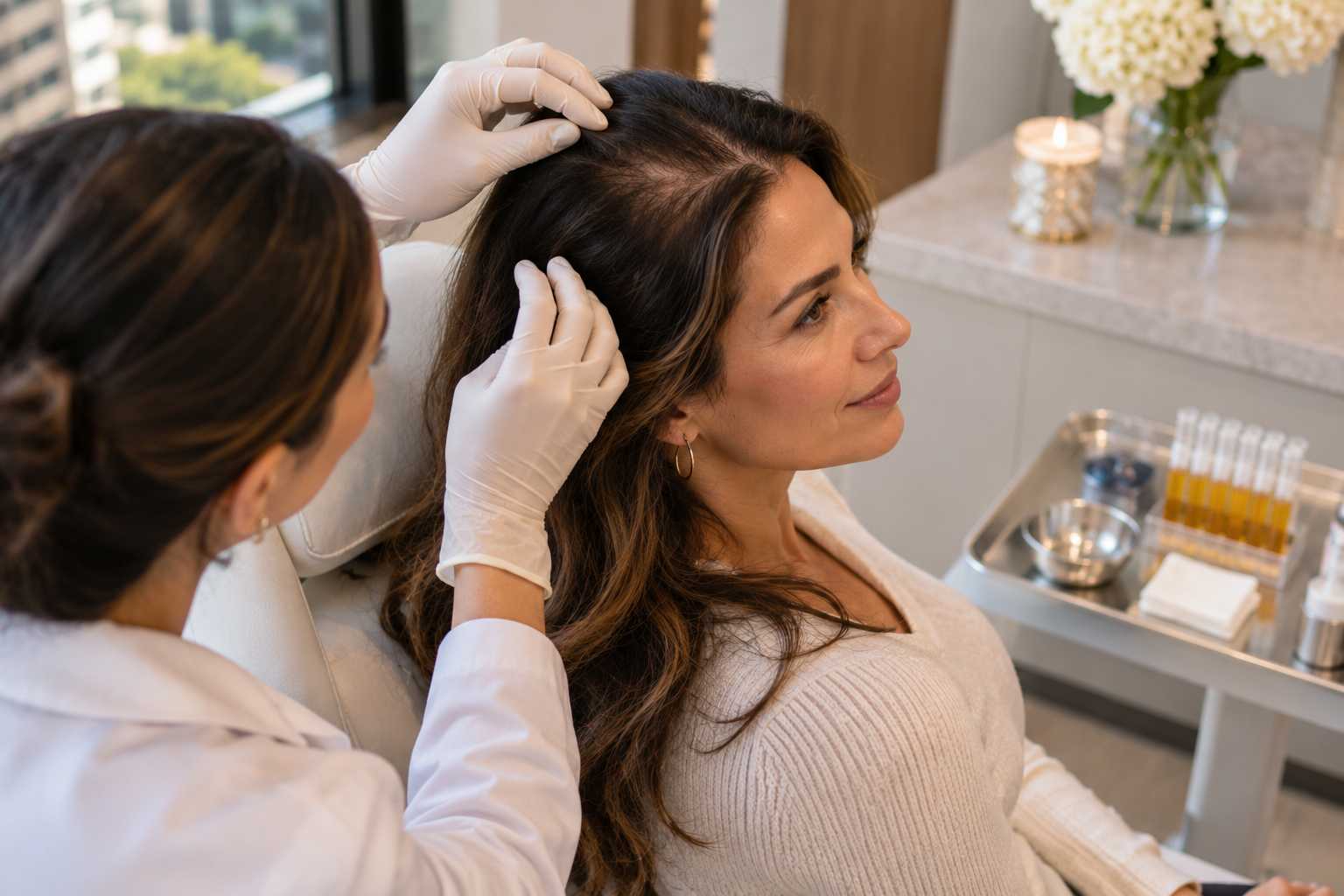
Therahaus Wellness describes a blood draw, centrifuge processing, preparation of the target area, and injections into the scalp. Its service page also describes MicronJet technology used to support comfort during treatment. Injection sensation and tolerance still vary.
Expect the provider to explain the planned areas, what discomfort may feel like, and how the scalp should be cared for afterward. Temporary tenderness, swelling, or pinpoint bleeding can occur. Ask about any activity restrictions, hair washing instructions, and when to contact the clinic about unusual symptoms.
When might hair changes become visible?
Hair growth cycles are slow. Changes, if they occur, generally require months rather than days. Early impressions can be misleading because shedding naturally fluctuates. Consistent scalp photographs and clinical measurements are more informative than relying on a single week of hair fall.
How many treatments are needed?
There is no universally established PRP schedule for every hair-loss diagnosis. Therahaus Wellness describes a treatment series on its service page, but your plan should be based on clinical assessment and ongoing response. Repeated sessions do not guarantee continued benefit.
Is PRP Better Than Hair Supplements or At-Home Treatments?
These approaches address different problems. Supplements help when a documented deficiency contributes to hair loss, but routine supplementation without a need may not improve hair density and can sometimes cause harm. Prescription and over-the-counter treatments have their own indications, risks, and evidence. PRP is a procedure with variable supporting data.
Rather than stacking products and procedures, start with a diagnosis. A thoughtful plan might include medical evaluation, an appropriate established treatment, and discussion of PRP as an additional option. The most expensive combination is not necessarily the most effective.
What Should You Ask Before Investing in PRP?
Ask which diagnosis is being treated, what published evidence applies to that diagnosis, how outcomes will be measured, and what would prompt stopping treatment. Also discuss the cost of an entire proposed series rather than only a single appointment.
Because hair thinning can affect confidence, expectations deserve special attention. Improvement may mean slower progression or modest density change, not restoration of an earlier hairline. An ethical consultation makes room for that distinction.
Why Does Personalized Treatment Matter in Chicago?
A premium aesthetic experience should be measured by clinical judgment, clarity, and the fit between a treatment and a person's goals, not by how many procedures are recommended. At Therahaus Wellness, the physician-led practice in Chicago's South Loop, a consultation offers an opportunity to review your concerns, previous treatments, relevant medical history, and realistic expectations. For clients who value discretion and polished, understated results, the right plan may involve a measured approach rather than the most intensive available intervention.
Questions worth asking include what changes are realistic, which risks matter for your skin or health, what aftercare requires, and how the treatment fits your calendar. The most useful consultation is one that also explains when a procedure is not the right choice.
How Can You Make a Thoughtful Treatment Decision?
Start with a specific concern rather than a trend. Bring a list of products and medications you use, disclose prior procedures and relevant conditions, and ask how success will be evaluated. Consider your tolerance for visible recovery, your preferred pace of change, and whether ongoing maintenance fits your priorities. Photos taken consistently under similar lighting can sometimes help assess subtle changes more reliably than day-to-day mirror checks.
A treatment plan should account for your schedule without allowing an upcoming occasion to override safe healing time. If you have a history of pigment changes, scarring, allergies, unusual bleeding, or reactions to previous procedures, raise those concerns before proceeding.
Frequently Asked Questions About PRP Injections
Can PRP regrow hair in completely bald areas?
Evidence is insufficient to promise regrowth where follicles are no longer functioning. A specialist should assess the cause and extent of loss.
Is PRP hair treatment painful?
Scalp injections can cause discomfort. Providers may use measures to improve comfort, but a painless experience cannot be guaranteed.
Is PRP safe because it uses my own blood?
Using autologous blood reduces some compatibility concerns, but blood draws and injections still carry risks such as bruising, infection, pain, and poor response.
Can PRP help stress-related shedding?
It should not be assumed to help. Many episodes of temporary shedding improve as the trigger resolves, and diagnosis should come before elective procedures.
Do I need maintenance PRP treatments?
Some protocols include maintenance, but evidence does not establish one ideal schedule. Decisions should reflect your response and the underlying diagnosis.
A Hair Plan Built on Evidence, Not Promises
Hair restoration is most valuable when it begins with an accurate explanation of what is changing. Explore Therahaus Wellness's clinical approach, its PRP service, and contact the South Loop practice to discuss whether scalp PRP is an appropriate part of your care.