Which Laser Skin Resurfacing Treatment Is Right for Your Skin and Your Schedule?

31
Have you ever looked at your skin under bright office lighting and noticed texture, old acne marks, or fine lines that seem to have arrived overnight? Laser skin resurfacing is one of the most effective ways to improve those concerns, but "laser" covers a wide range of treatments. The right choice depends on three things: what you want to correct, your skin tone, and how much downtime your life can realistically absorb.
At Therahaus Wellness in Chicago's South Loop, laser resurfacing is planned around both your skin and your calendar. This guide explains how resurfacing works, how lighter and deeper options differ, and how to match a treatment to your goals.
What Does Laser Skin Resurfacing Actually Do?
Laser skin resurfacing improves texture, tone, and overall skin quality by removing or disrupting damaged surface layers and stimulating new collagen. As the skin heals, it replaces those layers with fresher, smoother tissue, and collagen remodeling continues for months afterward.
The American Society of Plastic Surgeons describes how some resurfacing lasers remove the outer layer of skin, called the epidermis. Other approaches work in tiny columns or deliver heat below the surface, leaving surrounding tissue intact so the skin recovers faster.
What concerns can resurfacing address?
At our South Loop medspa, laser skin resurfacing is used for:
- Fine lines and wrinkles
- Acne scars
- Uneven or rough texture
- Enlarged-looking pores
- Sun damage
- Dullness
If your main frustration is a flat, tired-looking complexion or texture that makeup only emphasizes, our skin texture and dullness page shows how resurfacing fits alongside other options.
What Is the Difference Between Lighter and Deeper Laser Resurfacing?
The simplest way to think about resurfacing is as a spectrum. Lighter, non-ablative treatments heat the skin without removing the surface, so recovery is shorter and results build over a series. Deeper, more intensive treatments remove more damaged tissue, which can produce more dramatic change in fewer sessions but requires real recovery time.
Non-ablative fractional treatments may involve redness and mild sensitivity for one to three days. More intensive treatments can involve a healing period of seven to fourteen days or longer. The ASPS notes in its laser skin resurfacing recovery guide that skin often feels like a mild sunburn and typically becomes dry and peels about five days to a week after treatment.
Which lasers sit where on that spectrum?
Our providers choose from several technologies, each with a different role:
- MOXI is a gentle, non-ablative fractional laser for uneven tone, dullness, early pigmentation, and rough texture, with mild redness and dryness for several days.
- NanoLaserPeel is a gentle, lunchtime-friendly option for surface refreshment.
- MicroLaserPeel delivers deeper, more corrective resurfacing.
- HALO is a hybrid fractional laser that delivers two wavelengths in one session, addressing tone, texture, sun damage, and visible pores, with several days of redness, swelling, and peeling.
- ProFractional creates thousands of microscopic treatment columns to address acne scars, fine lines, wrinkles, and uneven texture.
- ContourTRL removes damaged skin at a precisely controlled depth.
How Do You Choose a Laser Based on Your Life Stage and Schedule?
The best laser is the one that matches both your goal and your reality. Here is how that decision often looks for different patients.
Busy professionals: planning around the calendar
If you cannot disappear for a week, lighter treatments in a series are usually the smarter route. A MOXI or NanoLaserPeel session can be scheduled before a long weekend, with mild redness and dryness that settle within days. If you want a more significant change from HALO or a deeper treatment, many working patients book it before a holiday break or a remote work stretch so the peeling phase happens at home rather than in a client meeting.
Gen Z and younger adults: texture, acne marks, and early prevention
Many patients in their twenties are dealing with lingering acne scars or rough texture rather than wrinkles. For textural scarring that lighter treatments have not improved, ProFractional is often part of the conversation. For people who simply want to keep skin bright and even as they get older, MOXI is an approachable entry point into laser treatment that can be repeated as part of an ongoing routine.
Luxury and long-term maintenance clients: a yearly reset
Patients who treat their skin as a long-term investment often build resurfacing into an annual or seasonal plan. HALO, for example, can be incorporated into a yearly maintenance schedule, and it can be combined with other treatments such as BBL HEROic, MOXI, injectables, or Hydrafacial when your provider recommends it. A coordinated plan tends to look more natural than chasing one concern at a time.
Is Laser Skin Resurfacing Right for Every Skin Tone?
Not every resurfacing laser suits every complexion. At Therahaus Wellness, laser skin resurfacing is most commonly recommended for patients with fair to medium skin tones, because certain resurfacing technologies carry a risk of pigmentation changes in darker complexions.
The ASPS lists darkening of the treated skin, called hyperpigmentation, and less commonly lightening, called hypopigmentation, among possible side effects. That is why your consultation matters so much. Your provider will look at your skin type, history, and goals before recommending a specific laser, and may suggest a different treatment entirely if it is a safer fit.
What Is the Treatment and Recovery Process Like?
Most resurfacing visits follow a predictable rhythm, and knowing it in advance makes the experience easier.
What happens during the appointment?
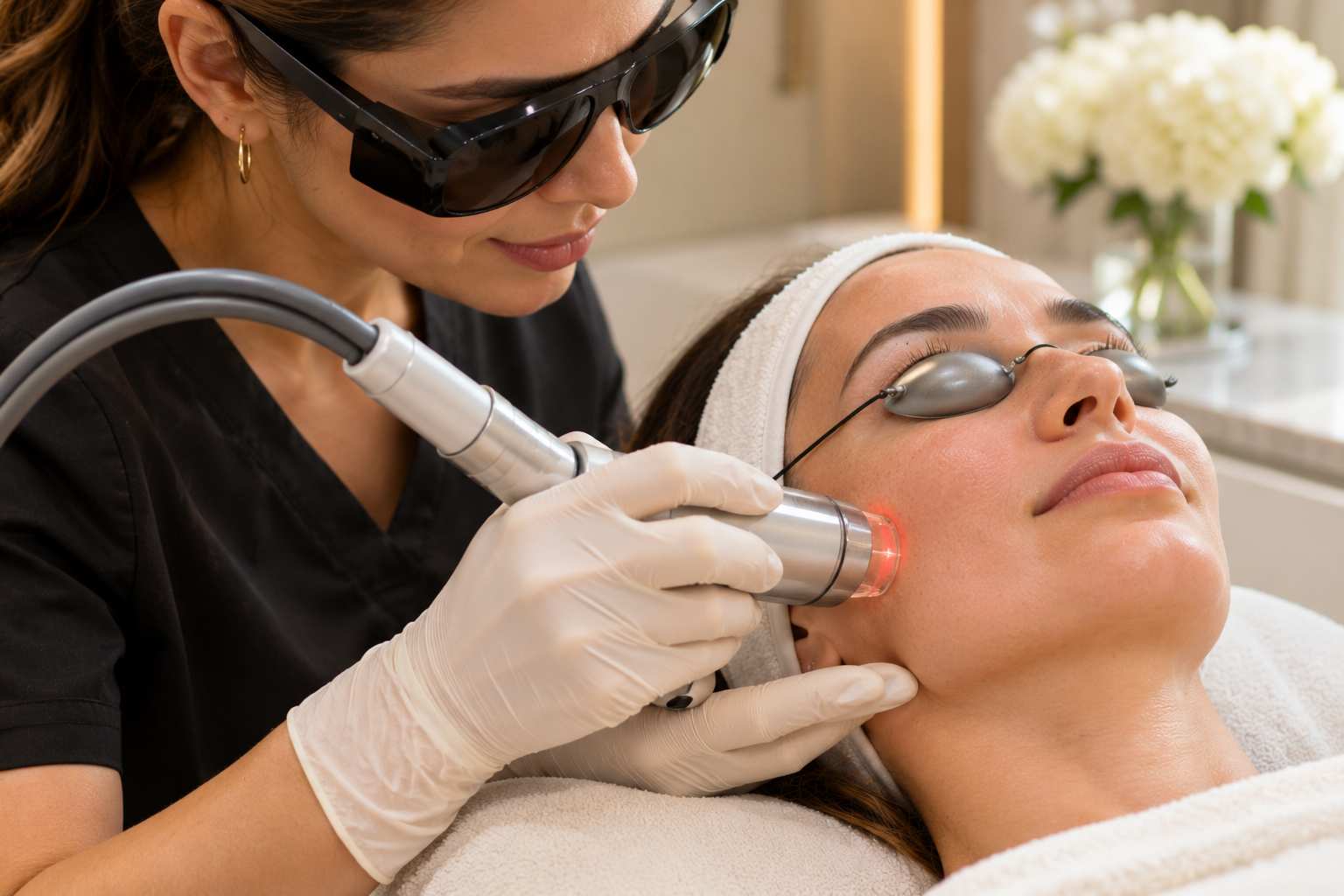
A topical numbing cream is applied and given time to take effect. The procedure itself may take 30 minutes to more than an hour depending on the area and intensity. Many patients feel warmth, prickling, or a sunburn-like sensation.
What does healing look like?
Expect redness, sensitivity, and, with deeper treatments, swelling, a sandpaper-like texture, and peeling over the following days. The American Academy of Dermatology notes in its guide to firming sagging skin that laser resurfacing can mean staying home for five to seven days, and that it carries a greater risk of side effects than treatments with no downtime.
How should I care for my skin afterward?
- Do not pick, peel, or remove healing skin, since this raises the risk of scarring and uneven pigmentation
- Follow your provider's cleansing and moisturizing instructions closely
- Wear SPF 50 every day once your skin has healed
- Avoid waxing, chemical peels, and other irritating treatments until you are fully healed
When Will You See Results From Laser Skin Resurfacing?
Initial improvements in tone and texture usually appear as the skin heals over the first one to two weeks. Collagen remodeling continues for three to six months, so many patients see their skin keep improving well after the peeling has passed. Some people reach their goal with a single intensive treatment, while others do better with a series of lighter sessions spaced several weeks apart.
What If Laser Resurfacing Is Not the Right Fit Yet?
Laser is a powerful tool, but it is not the only way to improve texture and dullness, and it is not always the best first step. If your skin tone, schedule, or comfort level points elsewhere, your provider may suggest a gentler starting point.
Other options for texture and tone
- Microneedling stimulates collagen and refines the skin's surface with minimal disruption
- Chemical peels, including VI Peel, exfoliate and speed up cell renewal
- Hydrafacial offers deep cleansing and instant radiance with no downtime
- Exosomes or PRP may be added to support skin renewal after certain treatments
For many patients, these options work as a bridge. You might start with a series of microneedling or peels to improve skin quality, then move to a laser treatment later when your calendar allows. Others alternate lighter treatments throughout the year and save a deeper resurfacing session for winter. A good plan is flexible, and it should change as your skin does.
Frequently Asked Questions About Laser Skin Resurfacing
Can laser skin resurfacing improve acne scars?
Yes, it can improve the appearance of many acne scars, particularly textural scarring. Deeper or fractional treatments such as ProFractional are often recommended for scars that have not responded to lighter options, and results continue to develop as new collagen forms.
How much downtime should I plan for?
It depends on the laser. Lighter non-ablative treatments may mean one to three days of redness, while more intensive treatments can require seven to fourteen days or longer of healing. Your provider will give you a realistic timeline before you book.
Is winter a good time for laser resurfacing in Chicago?
For many people, yes. Fresh, healing skin is especially vulnerable to the sun, and shorter, cloudier days make it easier to protect. Planning deeper treatments for the colder months also lets you enjoy results by spring.
Can I wear makeup after resurfacing?
Not right away. Makeup should be avoided until your skin has healed and your provider confirms it is safe, which varies by treatment depth.
Can laser resurfacing be combined with other treatments?
Often, yes. Add-ons such as PRP or exosomes may be recommended to support results, and lasers can be paired with treatments like injectables or Hydrafacial when your provider feels the timing is right.
Your Best Skin, Scheduled
The right laser is less about picking the strongest option and more about matching the treatment to your skin and the life you are living. A thoughtful plan can deliver smoother texture and brighter tone without derailing your calendar.
If you are in Chicago or the South Loop and ready to explore laser skin resurfacing at Therahaus Wellness, contact our team to schedule a consultation and find the laser that fits you.